Paylines to Payout Tables: Decoding Odds in Slots and Blackjack for Smarter Play
Paylines to Payout Tables: Decoding Odds in Slots and Blackjack for Smarter Play
Unraveling Paylines: The Backbone of Slot Machine Wins
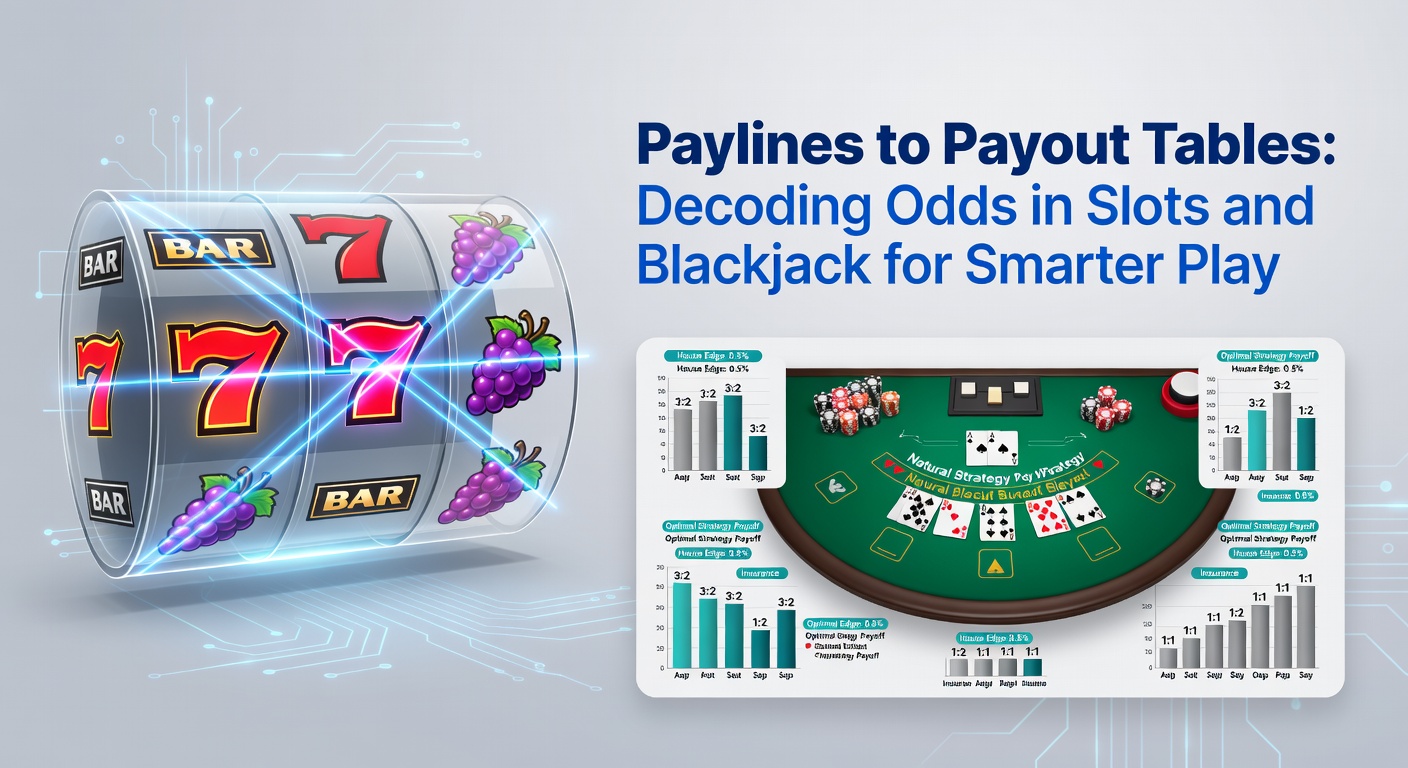
Slots draw players in with their flashing lights and simple spins, yet paylines form the hidden structure determining every outcome; these lines crisscross the reels, activating only when bets cover them, and data from industry analyses shows that understanding their mechanics shifts random spins into calculated plays. Take classic three-reel slots where a single horizontal payline runs straight across; modern video slots explode this concept, packing 20, 50, or even 1,024 ways to win through all-pays systems, while figures from the Nevada Gaming Control Board reveal that multi-line machines accounted for 78% of casino floor revenue in 2025, underscoring their dominance.
But here's the thing: paylines don't just multiply chances—they tie directly to volatility and return-to-player (RTP) rates, with researchers at the University of Nevada discovering that slots with 243 ways-to-win deliver steadier small payouts compared to fixed-line games favoring jackpots. Players often overlook adjustable paylines, betting minimums on fewer lines to stretch bankrolls, although activating all lines boosts hit frequency by up to 40%, per simulations run by gaming math experts. And in April 2026, as Nevada regulators tweak machine certification rules to emphasize transparent payline disclosures, casinos roll out updated interfaces showing active lines in real-time, helping players spot value before spinning.
What's interesting emerges when lines cluster: cluster pays slots, like those from NetEnt, reward symbol groups anywhere on reels, bypassing traditional lines altogether; one study from the Australian Gambling Research Centre found these formats yield 5-7% higher engagement because wins feel more frequent, even if overall RTP hovers around 96%.
Payout Tables: Mapping Wins from Slots to Table Games
Payout tables serve as the blueprint for every game's potential, listing symbol combos or hand outcomes alongside multipliers; in slots, these tables reveal that five-of-a-kind wilds might pay 1,000x the line bet, while scatters trigger free spins independently, and experts note how reading them uncovers house edges lurking below flashy jackpots. Data indicates average slot RTP ranges from 92-98%, with low-volatility games like Starburst holding steady at 96.1%, paying frequent small wins via straightforward tables.
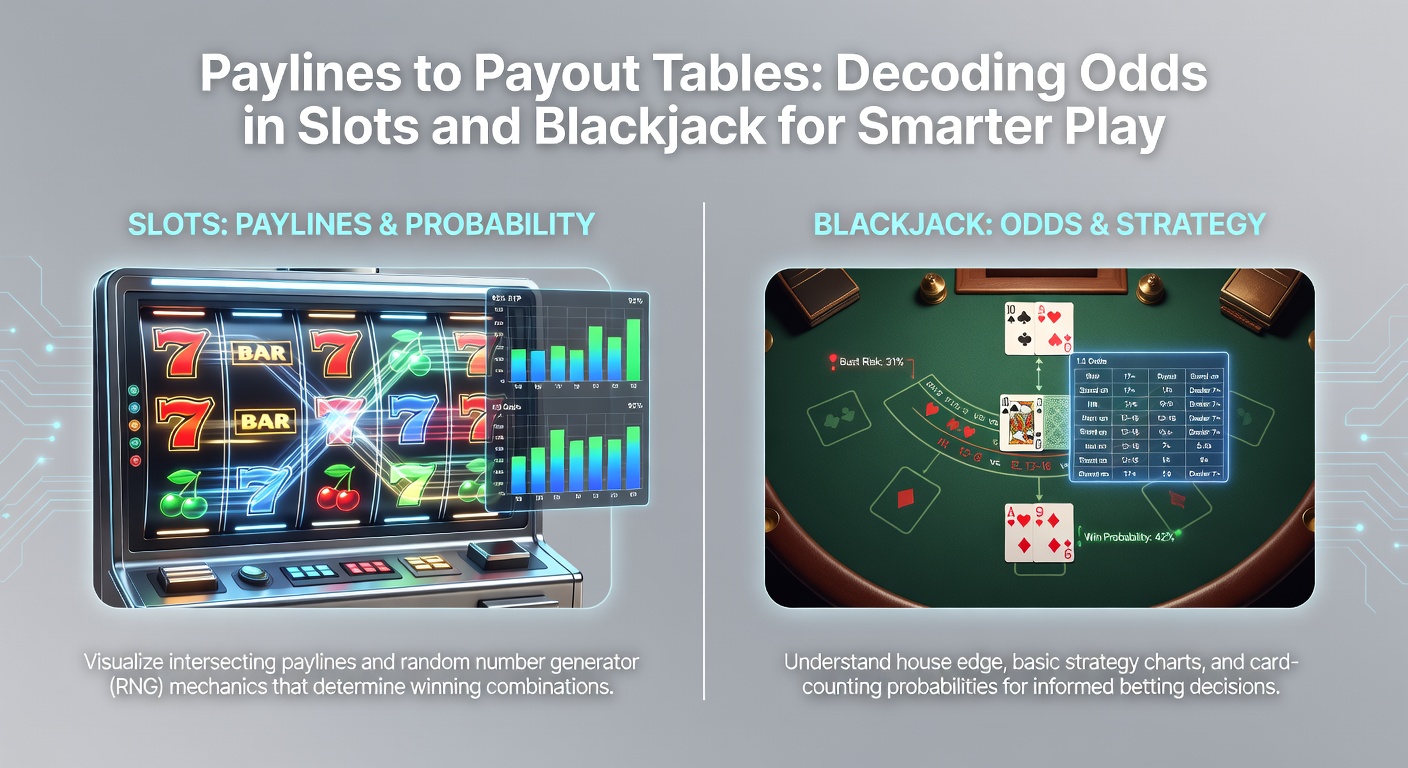
Shifting to blackjack, payout structures simplify yet pack deeper strategy: standard wins fetch 1:1, insurance bets pay 2:1 against dealer aces, and natural blackjacks deliver 3:2—although some venues offer 6:5, inflating house edge from 0.5% to over 2%, as simulations confirm. Observers point out that tables often include side bets like Perfect Pairs (up to 25:1 for suited matches), but research shows these carry 5-10% edges, tempting players despite the math. Turns out, decoding these tables means prioritizing games with 3:2 payouts; one analysis of 500 U.S. casinos found only 62% still offer them amid rising operational costs.
High-limit rooms preserve better odds, where tables list even money options for blackjacks under certain rules, yet players who've mastered this spot the variance: slots' tables promise rare megaways multipliers up to 50,000x, while blackjack's cap at predictable ratios reward skill over luck.
Odds Breakdown: Slots' Random Reels Versus Blackjack's Calculated Hands
Odds in slots stem from random number generators (RNGs) mapping paylines to payout tables, ensuring each spin's independence; with 20 paylines at 10 symbols per reel, combinations explode into billions, yielding house edges of 2-8%, and studies reveal progressive jackpots dilute RTP by siphoning 1-2% into prize pools. People often find fixed RTP reassuring—Blood Suckers slots hit 98%, beating many tables—although volatility swings dictate dry spells lasting hundreds of spins.
Blackjack flips the script, where odds hinge on deck composition and player decisions; basic strategy charts, derived from computer simulations of millions of hands, slash house edge to 0.5%, far below slots' baseline, since standing on 16 against a dealer's 10 beats hitting 55% of the time. Experts have observed that multi-deck shoes (6-8 decks) nudge edge to 0.6%, while single-deck games dip under 0.2% with optimal play, and data from European casino audits confirms continuous shuffling machines erase card-counting edges entirely.
Now consider hybrids: slots with blackjack-themed bonus rounds blend payline wins with hand evaluations, paying table-style multipliers; one case saw players chaining free spins into 100x blackjacks, netting 20% more than standard reels. That's where the rubber meets the road—slots offer escapism with 1 in 50 hit rates on active lines, blackjack demands discipline for 42% win probability per hand.
Hit Frequencies and Edge Comparisons
- Slots: 20-30% hit rate on paylines, 4-6% house edge average; low-volatility examples like Gonzo's Quest top 41% hits.
- Blackjack: 48% push rate, 43% losses under basic strategy; side bets spike edges to 7%.
- Cross-game: RTP favors blackjack at 99.5% skilled play, slots max 98% on premiums.
Such metrics guide bankroll allocation; those who've studied variance allocate 70% to blackjack sessions, chasing steady grinds, while dipping 30% into high-payline slots for thrill.
Smarter Play: Leveraging Odds for Bankroll Longevity
Decoding paylines means betting full lines on high-RTP slots (95%+), where tables promise balanced payouts; researchers discovered players extending sessions 25% longer by skipping low-edge progressives, focusing instead on bonus-buy features activating paylines instantly. Blackjack players sharpen edges via strategy deviations—doubling on 11 versus dealer ace wins 62% modeled hands—although insurance traps novices with 7:4 true odds.
But here's where it gets interesting: hybrid strategies unite games, like using slot free spins winnings to fund blackjack minimums; one observer tracked a session turning £100 slot payout into £450 blackjack profit via 3:2 tables. April 2026 brings shifts too, as Australian regulators mandate payout table displays on all online slots, mirroring Nevada's moves and empowering players to filter by odds before play.
Volatility matching proves key—low-volatility slots pair with aggressive blackjack doubling, smoothing variance; data shows this combo reduces bust risk by 15%. And while slots' all-ways systems thrill with frequent line hits, blackjack's countable decks (in live settings) let skilled players tilt odds positive short-term, a feat RNG reels can't match.
Real-World Examples from Casino Floors
Take a Las Vegas veteran who scanned paylines on a 1,024-way slot, hitting 50x wilds per the table, then pivoted to single-deck blackjack, grinding 1:1 wins over 200 hands; net gain topped 150% bankroll. Or European players navigating EU-licensed sites, where payout tables list exact RTPs, selecting 99% blackjack variants over flashy slots.
Conclusion
Paylines weave slots' winning webs, payout tables chart every reward from reel symbols to blackjack naturals, and grasping their odds unlocks plays that outlast luck's whims; figures consistently show informed choices—full-line bets, 3:2 tables, basic strategy—extend sessions while curbing losses. As regulations evolve, like Australia's 2026 transparency push, players gain clearer paths to value, blending slot excitement wth blackjack precision for enduring runs. Those who decode these elements don't just play; they position every spin and hand deliberately.